Tag: consumption

  • Your Money or Your Life: Redefining the Trade Between Time, Energy, and Fulfillment

    Your Money or Your Life: Redefining the Trade Between Time, Energy, and Fulfillment

    I’m reading Your Money or Your Life, a classic on Financial Independence. It’s filled with tactics and tools, some practical, some debatable, but this isn’t a summary. What fascinates me about the book are a few key ideas that make you rethink the relationship between money, time, energy, and happiness.

    How Much of Your Life Are You Spending?

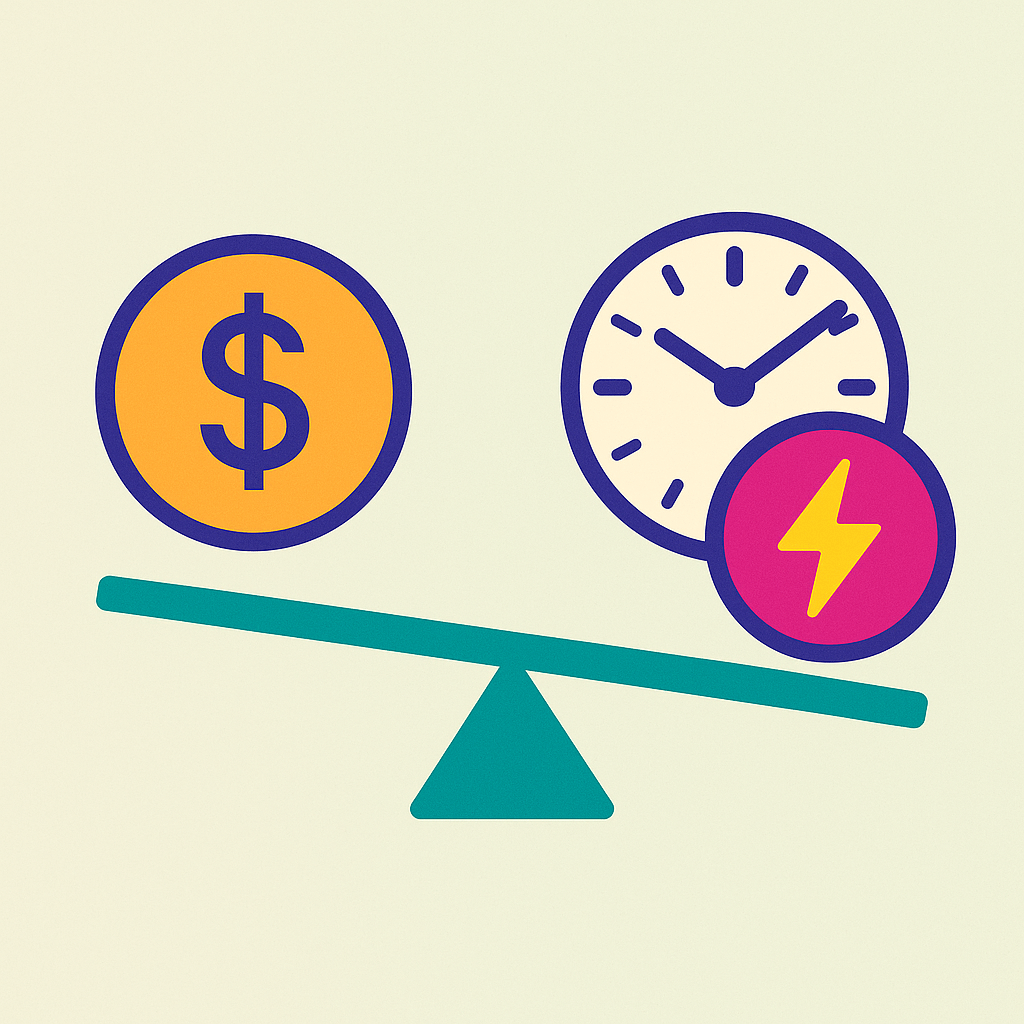
    The most powerful lesson in the book is to measure every expenditure as an exchange of time and energy.

    Instead of asking, “Can I afford this?”, ask, “How many hours of my life will this cost me?” Calculate your real hourly wage after taxes and expenses, and use that to measure every purchase. Suddenly, each expense becomes tangible. Those shoes don’t cost $150, they cost six hours of your freedom.

    This perspective transforms spending from a blur of digital transactions into something real. You start to see that every swipe of your card is a small trade of your life energy.

    Even the way we pay changes how we perceive spending. Paying with cash is psychologically the most painful. You literally hand over your money and feel it leave your pocket. Debit cards are easier; you only see the loss later when you check your bank statement. But credit cards are the most dangerous—they create an illusion of affordability. You don’t feel the loss until the bill arrives, usually when it’s too late.

    Thinking in terms of time and energy works better than any budgeting app and takes the payment method illusion out of the equation. It connects money back to its source: your life.

    The Cost of Boredom

    The book also touches on a subtler truth, one I’ve often seen in myself. Free time isn’t always free.

    When we’re bored, we start spending. “Maybe I’ll buy a better coffee machine.” “Maybe a new lens will make me take better photos.” Boredom leads to consumption because it makes you think that a purchase can fill the void.

    But what we really crave in those moments isn’t an object, it’s meaning, stimulation, engagement. Dopamine is the chemical disguise of emptiness.

    The solution isn’t to stop spending altogether. Spend on your interests, not your impulses. Use your resources to feed your creativity, not your cravings. If photography makes you feel alive, buy the gear you’ll actually use. But make sure it’s the act of creating that fulfills you, not the comfort of owning things.

    Don’t become the person who owns the best camera, lens, and gimbal, but never takes photos.

    How We’re Trained to Consume

    Spending money when bored is not your fault. Impulse buying isn’t a flaw of character; it’s a product of design. Modern marketing is engineered to make us feel incomplete.

    We’re sold the idea that consumption is self-improvement. “Invest in a new keyboard to boost productivity.” It’s all the same illusion, objects dressed as progress and investments.

    Even our leisure has been monetized. We’re told where to drink coffee, where to be seen, what to wear, and how to signal belonging. The fashion industry is the perfect example: clothes that are perfectly functional become “obsolete” overnight. And the cruelest part? Many buy the yoga pants without ever doing yoga.

    When people spend money for approval, marketers win, because the hunger for validation never ends. You can always have more stuff, you can always be richer.

    “Men do not desire to be rich, only to be richer than other men.”

    John Stuart Mill

    From Riches to Fulfillment

    Being “rich” is comparative, it’s always in relation to someone else. Fulfillment, on the other hand, is personal. It can’t be measured, copied, or competed over.

    Fulfillment takes you off the racetrack. It declutters your life and redirects your energy toward what truly matters: family, hobbies, learning, small luxuries that align with your values.

    To me, mindful spending isn’t about restriction, it’s about alignment. I use one simple test for larger purchases: frequency of use.

    If I buy a new coffee grinder, I don’t see it as a luxury. I use it every day, and I deeply enjoy making coffee. That’s worth it. But my camera, which I use only on trips, doesn’t need a new lens or body. It already serves its purpose. If I ever want to become a better photographer, I can invest in a course and buy better gear when I become a better photographer that spends a lot of time taking photos.

    Spend more where you live more. Spend less where you merely escape.

    The goal isn’t to own less—it’s to own consciously. Every dollar you spend is a choice about how to use your life energy. Make it count.
  • From Evolutionary Anxiety to Financial Peace: The Power of Settling for Less

    From Evolutionary Anxiety to Financial Peace: The Power of Settling for Less

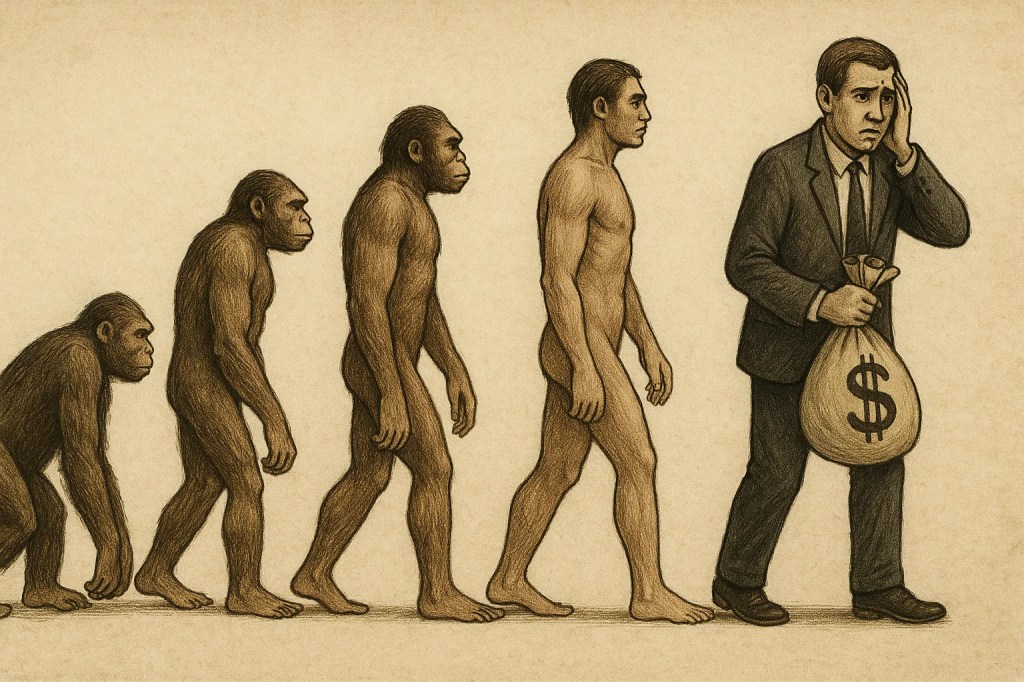
    Human nature may be shaped by much older codes than we think. The roots of our anxieties might lie deep within our evolutionary history. These ancient codes may still be triggering us in today’s modern world.

    In The Denial of Death, Ernest Becker argues that humans have evolved into “hyper-anxious” beings. He writes:

    “Darwinians thought: early men who were most afraid were those who were most realistic about their situation in nature, and they passed on to their offspring a realism that had a high survival value. The result was the emergence of man as we know him: a hyperanxious animal who constantly invents reasons for anxiety even where there are none.”

    In other words, the most cautious early humans—those who feared, hesitated, and avoided risk—were the ones who survived. That tendency was passed down through generations, bringing us to where we are now: a species capable of generating anxiety even when there’s no real cause.

    Modern Threats: Money, Status, and the Future

    We no longer need to run from a tiger in the forest to survive. But that internal alarm system still runs strong. And if you ask what triggers it the most today: it’s money. Or more precisely, the uncertainty, status pressure, and future worries that revolve around it.

    The wealthy live in fear of losing what they have; the poor fear not being able to sustain their lives. And the middle class? Perhaps they feel the most squeezed—juggling the fear of losing what they’ve gained while trying to appear as if they belong to the next tier. A better house, a better vacation, a better car… each becomes a fresh source of anxiety. As our income increases, so does our standard of living—and instead of easing our worries, this only adds to them.

    The Sense of Enough: Knowing When to Stop

    Maybe the real problem starts here: the concept of a “saturation point” has all but vanished. “Enough” has become a moving target. But if we could pause for a moment, define what’s enough for us, and keep the rest as a safety net, that might significantly ease our anxieties.

    If we could distance ourselves just a bit from status addiction, constant comparison, and the idea that “more is always better,” perhaps we’d find ourselves closer to peace.

    Revisiting Our Relationship with Money

    Then there’s the matter of how we manage money. Especially when it comes to investing, our minds are haunted by the question: “What if I lose it?” This is where risk appetite comes into play. We should be asking ourselves: What kind of investment would let me sleep peacefully at night?

    Since everyone’s perception of risk is different, “safe” for one person may mean time deposits, while for another it might mean index funds or hand-picked stocks. The key is to stay within what we know and resist getting caught up in other people’s games and FOMO.

    The Bottom Line: Choose What’s Right—Not What’s More

    By improving our financial literacy, following a path that matches our risk profile, and—most importantly—not blindly chasing “more,” we can lead lives that are less anxious and more content. That’s how we bring peace to both our wallets and our minds.

    If we can build and commit to a financial and lifestyle model that truly suits us and free ourselves from the constant chase for more, I’m confident we can reduce our anxieties to a minimum.

  • What Is Abundance?

    What Is Abundance?

    The concept of abundance is one that many of us struggle to define. What does true abundance mean? In this post, I’ll try to shed light on this idea.

    Defining Abundance

    Is abundance about having everything we desire? Is it being able to buy anything that catches our eye? Or is it simply having lots of money?

     I believe abundance is none of these. To me, abundance means not yearning for more in any area of our lives.

    Take work, for example. I feel a sense of abundance in this area. I have a good position, a private office, and a comfortable car. Sure, there could always be better perks if we dig into the details. But I don’t feel a strong desire for anything else in this regard. I feel abundant. Or consider my home. I live in an average-sized house in a pleasant neighborhood. A terrace would be great, and I wouldn’t say no to more rooms or a larger living space. But I don’t actively wish for these things. I feel abundant in this aspect as well. Socially, I feel I have enough close friends. My sense of abundance is strong in this area too.

    The Trap of Comparison

    There’s no end to wanting more money or constantly buying things. Unless you’re Elon Musk or Warren Buffett, there will always be people wealthier than you and with more possessions. If you need guidance on this, I highly recommend Morgan Housel’s book The Psychology of Money. The author provides excellent examples about the concept of comparison:

    “The ceiling of social comparison is so high that virtually no one will ever hit it. Which means it’s a battle that can never be won, or that the only way to win is to not fight to begin with—to accept that you might have enough, even if it’s less than those around you.”

    This means that as long as what we have feels sufficient, we are living in abundance. But when we compare, we enter an endless spiral where “enough” is never enough.

    To escape this, we must stop comparing ourselves to others. As long as we envy others’ possessions, we’ll never understand what abundance truly means. There will always be someone wearing a better watch, driving a more expensive car, or living in a fancier house. Knowing your personal “enough” and not desiring more can lead you to a life filled with abundance.

    Here’s an interesting side note: we tend to compare ourselves to those ahead of us, never those who are less fortunate. This isn’t to suggest we should. I believe all comparisons are flawed; I just find this tendency intriguing.

    The Cycle of Outdated and New

    There’s also the issue of things losing their luster. We love our new possessions initially, but soon, they stop giving us the same joy. What happens next? We feel an irresistible urge to buy newer ones—phones with features we’ll never use, cars bigger than we need, trendy clothes that quickly go out of style.

    Living in a consumer-driven society, appreciating what we already have and resisting the lure of the new requires serious effort. I’ve developed a few personal tactics for this. For instance, I choose classic, simple clothing over trendy items, so I can wear them for years. If I were to buy a car, I’d go for the highest spec of a mid-range brand, ensuring long-term comfort. These choices extend the lifespan of my purchases and help me resist unnecessary upgrades.

    The Personal Meaning of Abundance

    Even though this post is titled “What Is Abundance?” I don’t think I can provide a definitive answer. Instead, I’ll share what it means to me and reflect on what gives me a sense of abundance.

    Many people think money guarantees a good life, but most have no clear idea of what that “good life” entails. This lack of clarity leads to aimlessly chasing more money and spending it on “better” things without ever feeling fulfilled.

    For me, abundance is about having enough of what brings meaning to our lives. But first, we need to identify what that is. It varies widely: helping animals, growing rare plants, cooking, or listening to music on a premium sound system. These choices are deeply personal, and there’s no right or wrong.

    For me, spending time with family and friends is a priority. That requires having plenty of free time. Do I have it? Not really. As a full-time office worker, I’m constrained by laws and company policies regarding time off. In my current situation, I can’t claim to have an abundance of time.

    Materially, I think I have a healthy relationship with things. I don’t live a luxurious life, though this definition is subjective. For example, I enjoy summer trips to the southern coast. I don’t splurge on extravagant beach clubs; instead, I find joy in simple pleasures—a modest meal, a day at the public beach, and some wine or beer. This simplicity makes me feel rich in this area of life.

    Financial Worries

    While I feel abundant, I’m not without worries. The idea of raising a child and the associated costs terrify me. Would I be able to provide the same life my parents gave me? These fears are deeply tied to money. John Armstrong’s book How to Worry Less About Money suggests addressing financial concerns by answering four questions:

    • Why do I need money and why is it important to me?
    • How much money do I need for this purpose?
    • What’s the best way for me to acquire this amount?
    • What economic responsibilities do I have toward others?

    These questions play a significant role in helping us feel that we are living in abundance. The feeling of needing money and the sense of living in abundance are essentially two sides of the same coin.

    The question of why we need money is a profound one. If your answer revolves around owning things, you’ll end up in an endless spiral because there will always be more expensive options. In the same book (How to Worry Less About Money), the author explains that financial issues often stem from our social anxieties. For example, looking at my perfectly functional car and wanting to replace it is a worry rooted in my social relationships. I would argue that these types of concerns never truly end. Similarly, the fear of struggling with my child’s school expenses is also a form of social pressure. If there’s a reason not to send them to the local public school, it’s likely because others are sending their children to private schools.

    If you can answer, “I am satisfied with my current life and only need enough money to maintain my current standard of living,” then you are closer to answering the second question. The phrase “current standard” can be shaped to your preferences. This might include dining at a nice restaurant twice a week, enjoying good wine, smoking a cigar once a week, and taking a vacation every summer. If you are content with your current level, you have already achieved abundance. To determine how much money you need, you can calculate your annual expenses and adjust them for inflation. The second question involves more budgeting and calculations. That’s something to delve into at another time. But let’s assume you’ve arrived at a figure.

    The third question, for me, is a balancing act. If I can cut expenses and gain more personal time, I’ll always choose that route, even if it means giving up some luxuries. For example, would I prefer working 10 hours a day for 5 units of income, or 5 hours a day for 3 units? My answer will always be to keep the hours low.

    The fourth question, for me, revolves around family and, more specifically, child-related responsibilities. For others, it might also include obligations to care for their parents. These responsibilities must be factored into the equation.

    Understanding the answers to these questions can also clarify whether we’re living in abundance. After all, both the need for money and the feeling of abundance are two sides of the same coin.

    Achieving a Sense of Abundance

    There’s no one-size-fits-all formula, but here are some steps to explore:

    1. Observe your activities and identify what brings you joy.
    2. Create a list and start scheduling time for these things.
    3. Assess whether enjoying these requires additional spending.
    4. Develop a plan to prioritize what makes you happy while sacrificing less meaningful activities.
    5. Estimate the resources (time, money, energy) you’ll need to focus on these pursuits.

    Abundance is not just about what we have but about how what we have adds meaning to our lives. Instead of acquiring more, let’s focus on choosing what’s truly valuable.

    As Naval Ravikant says in The Almanack of Naval Ravikant:

    “If you spend your time doing what you love, you’re already rich.” In all circumstances, prioritize having the freedom to control your time.

    References:

    Housel, M. (2020). The Psychology of Money: Timeless Lessons on Wealth, Greed, and Happiness. Harriman House.

    Armstrong, J. (2012). How to Worry Less About Money. The School of Life.

    Jorgenson, E. (2020). The Almanack of Naval Ravikant: A Guide to Wealth and Happiness. Self-published.