Tag: mental-health

  • Your Money or Your Life: Redefining the Trade Between Time, Energy, and Fulfillment

    Your Money or Your Life: Redefining the Trade Between Time, Energy, and Fulfillment

    I’m reading Your Money or Your Life, a classic on Financial Independence. It’s filled with tactics and tools, some practical, some debatable, but this isn’t a summary. What fascinates me about the book are a few key ideas that make you rethink the relationship between money, time, energy, and happiness.

    How Much of Your Life Are You Spending?

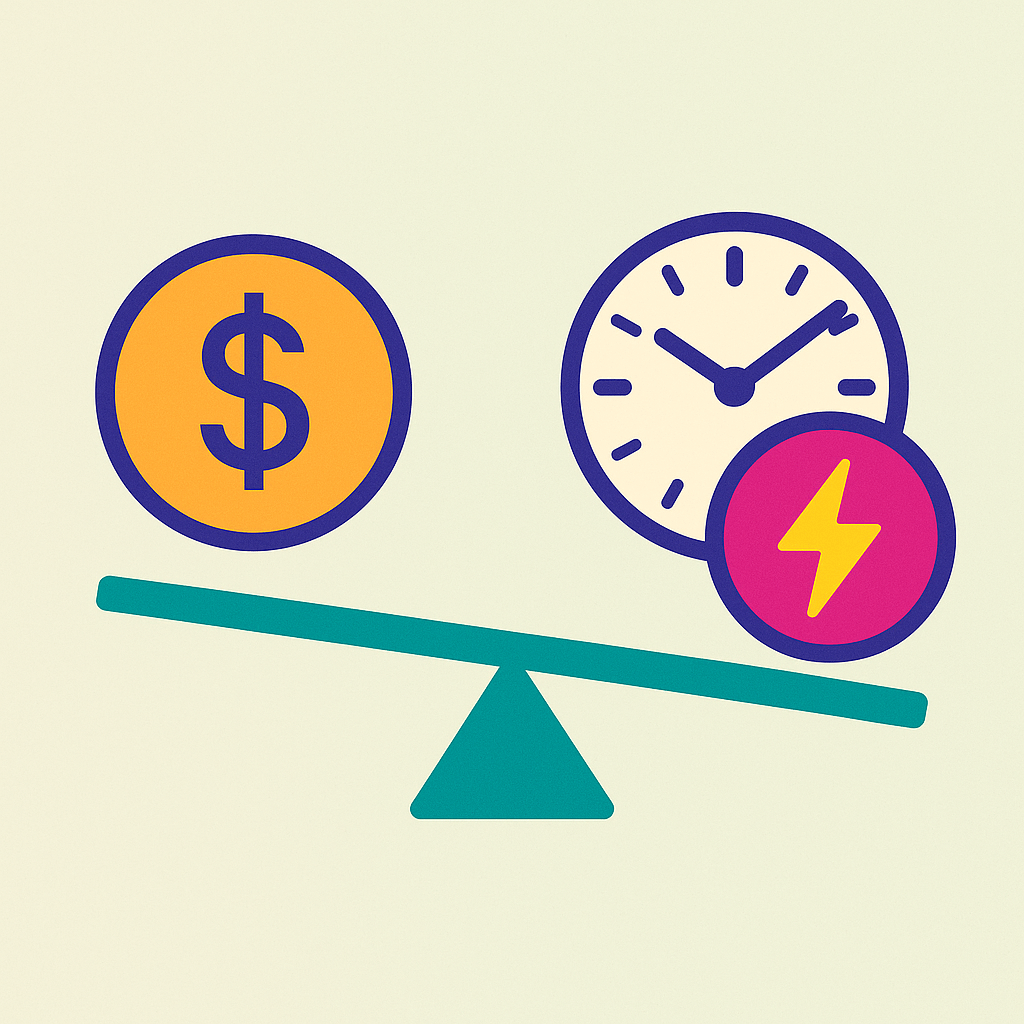
    The most powerful lesson in the book is to measure every expenditure as an exchange of time and energy.

    Instead of asking, “Can I afford this?”, ask, “How many hours of my life will this cost me?” Calculate your real hourly wage after taxes and expenses, and use that to measure every purchase. Suddenly, each expense becomes tangible. Those shoes don’t cost $150, they cost six hours of your freedom.

    This perspective transforms spending from a blur of digital transactions into something real. You start to see that every swipe of your card is a small trade of your life energy.

    Even the way we pay changes how we perceive spending. Paying with cash is psychologically the most painful. You literally hand over your money and feel it leave your pocket. Debit cards are easier; you only see the loss later when you check your bank statement. But credit cards are the most dangerous—they create an illusion of affordability. You don’t feel the loss until the bill arrives, usually when it’s too late.

    Thinking in terms of time and energy works better than any budgeting app and takes the payment method illusion out of the equation. It connects money back to its source: your life.

    The Cost of Boredom

    The book also touches on a subtler truth, one I’ve often seen in myself. Free time isn’t always free.

    When we’re bored, we start spending. “Maybe I’ll buy a better coffee machine.” “Maybe a new lens will make me take better photos.” Boredom leads to consumption because it makes you think that a purchase can fill the void.

    But what we really crave in those moments isn’t an object, it’s meaning, stimulation, engagement. Dopamine is the chemical disguise of emptiness.

    The solution isn’t to stop spending altogether. Spend on your interests, not your impulses. Use your resources to feed your creativity, not your cravings. If photography makes you feel alive, buy the gear you’ll actually use. But make sure it’s the act of creating that fulfills you, not the comfort of owning things.

    Don’t become the person who owns the best camera, lens, and gimbal, but never takes photos.

    How We’re Trained to Consume

    Spending money when bored is not your fault. Impulse buying isn’t a flaw of character; it’s a product of design. Modern marketing is engineered to make us feel incomplete.

    We’re sold the idea that consumption is self-improvement. “Invest in a new keyboard to boost productivity.” It’s all the same illusion, objects dressed as progress and investments.

    Even our leisure has been monetized. We’re told where to drink coffee, where to be seen, what to wear, and how to signal belonging. The fashion industry is the perfect example: clothes that are perfectly functional become “obsolete” overnight. And the cruelest part? Many buy the yoga pants without ever doing yoga.

    When people spend money for approval, marketers win, because the hunger for validation never ends. You can always have more stuff, you can always be richer.

    “Men do not desire to be rich, only to be richer than other men.”

    John Stuart Mill

    From Riches to Fulfillment

    Being “rich” is comparative, it’s always in relation to someone else. Fulfillment, on the other hand, is personal. It can’t be measured, copied, or competed over.

    Fulfillment takes you off the racetrack. It declutters your life and redirects your energy toward what truly matters: family, hobbies, learning, small luxuries that align with your values.

    To me, mindful spending isn’t about restriction, it’s about alignment. I use one simple test for larger purchases: frequency of use.

    If I buy a new coffee grinder, I don’t see it as a luxury. I use it every day, and I deeply enjoy making coffee. That’s worth it. But my camera, which I use only on trips, doesn’t need a new lens or body. It already serves its purpose. If I ever want to become a better photographer, I can invest in a course and buy better gear when I become a better photographer that spends a lot of time taking photos.

    Spend more where you live more. Spend less where you merely escape.

    The goal isn’t to own less—it’s to own consciously. Every dollar you spend is a choice about how to use your life energy. Make it count.

  • From Evolutionary Anxiety to Financial Peace: The Power of Settling for Less

    From Evolutionary Anxiety to Financial Peace: The Power of Settling for Less

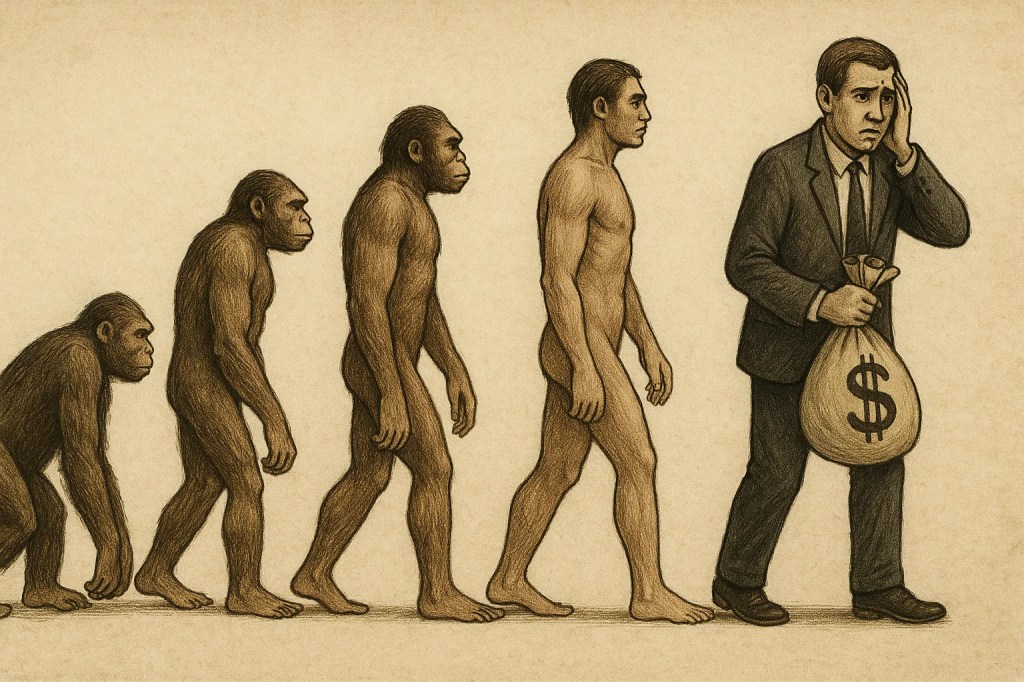
    Human nature may be shaped by much older codes than we think. The roots of our anxieties might lie deep within our evolutionary history. These ancient codes may still be triggering us in today’s modern world.

    In The Denial of Death, Ernest Becker argues that humans have evolved into “hyper-anxious” beings. He writes:

    “Darwinians thought: early men who were most afraid were those who were most realistic about their situation in nature, and they passed on to their offspring a realism that had a high survival value. The result was the emergence of man as we know him: a hyperanxious animal who constantly invents reasons for anxiety even where there are none.”

    In other words, the most cautious early humans—those who feared, hesitated, and avoided risk—were the ones who survived. That tendency was passed down through generations, bringing us to where we are now: a species capable of generating anxiety even when there’s no real cause.

    Modern Threats: Money, Status, and the Future

    We no longer need to run from a tiger in the forest to survive. But that internal alarm system still runs strong. And if you ask what triggers it the most today: it’s money. Or more precisely, the uncertainty, status pressure, and future worries that revolve around it.

    The wealthy live in fear of losing what they have; the poor fear not being able to sustain their lives. And the middle class? Perhaps they feel the most squeezed—juggling the fear of losing what they’ve gained while trying to appear as if they belong to the next tier. A better house, a better vacation, a better car… each becomes a fresh source of anxiety. As our income increases, so does our standard of living—and instead of easing our worries, this only adds to them.

    The Sense of Enough: Knowing When to Stop

    Maybe the real problem starts here: the concept of a “saturation point” has all but vanished. “Enough” has become a moving target. But if we could pause for a moment, define what’s enough for us, and keep the rest as a safety net, that might significantly ease our anxieties.

    If we could distance ourselves just a bit from status addiction, constant comparison, and the idea that “more is always better,” perhaps we’d find ourselves closer to peace.

    Revisiting Our Relationship with Money

    Then there’s the matter of how we manage money. Especially when it comes to investing, our minds are haunted by the question: “What if I lose it?” This is where risk appetite comes into play. We should be asking ourselves: What kind of investment would let me sleep peacefully at night?

    Since everyone’s perception of risk is different, “safe” for one person may mean time deposits, while for another it might mean index funds or hand-picked stocks. The key is to stay within what we know and resist getting caught up in other people’s games and FOMO.

    The Bottom Line: Choose What’s Right—Not What’s More

    By improving our financial literacy, following a path that matches our risk profile, and—most importantly—not blindly chasing “more,” we can lead lives that are less anxious and more content. That’s how we bring peace to both our wallets and our minds.

    If we can build and commit to a financial and lifestyle model that truly suits us and free ourselves from the constant chase for more, I’m confident we can reduce our anxieties to a minimum.

  • The Journey Over the Goal: Finding Growth and Happiness Together

    The Journey Over the Goal: Finding Growth and Happiness Together

    In this post, I will explore the difference between the journey and goals, and discuss how growth can merge with happiness.

    I’ll start with a quote again. I heard a sentence on the Modern Wisdom podcast in the episode How to Stop Being Such a People Pleaser:

    To be better, we don’t need to hate where we are.

    Although this statement was mentioned in a completely different context in the podcast, it deeply resonated with me. Being happy with where we are should not prevent us from striving to be better. I’ve always believed that we need to make an effort to improve ourselves continually. This is not something born out of a sense of inadequacy or unhappiness. Rather, it’s a mentality connected to the joy we can derive from self-improvement. We don’t need to feel inadequate or unhappy today to develop our curiosities or skills that we must sustain and to keep learning.

    The belief that happiness is being content with what we have and being happy where we are is something I strongly hold and try to place at the center of my life. However, this does not mean we should stay stagnant. In fact, we must not. Striving to be better, doing certain things more effectively, and constantly developing ourselves are, in my opinion, some of the things that make life enjoyable. In Kahlil Gibran’s The Prophet, he mentions that it is said that we are only as weak as our weakest link. However, he adds, this is only half the truth and that we are also as strong as our strongest link. In essence, we should strive to make our strongest link even stronger. What matters is doing this not out of stubbornness, purpose, or desire but simply for the sake of being better.

    During cliché conversations that start with “I wish I didn’t have to work,” the most common argument we hear is, “If you don’t work, you’ll get bored.” I absolutely disagree with this. Working, especially as an employee in someone else’s company, can create feelings of dissatisfaction for many. Working for a shareholder of the company, rather than yourself, doesn’t add much to your life. We can’t overlook the experience, knowledge, and development opportunities it provides. It might also give you a good income or allow you to live a rich lifestyle, but unfortunately, it won’t bring meaning to your life. Even if your improvement in the company enables you to climb the career ladder—which is not guaranteed—the higher you go, the less your well-being improves. In exchange for the financial opportunities provided, more of your time, increased stress, and greater responsibility will be demanded of you. The scenario changes only when you use what you’ve gained to carve your own path.

    I’ve met many people who dedicate themselves to the company they work for and make it their identity. A place where there’s always a risk of being shown the door if things go south is not somewhere to overly identify with. I’m not advocating against a sense of belonging. We can enjoy work and feel a sense of belonging to the company through concepts like achievement or teamwork. But going beyond this and introducing yourself with your job title or distinguishing others by the name of their workplace goes too far. (i.e. John from KPMG) I don’t think such people have a particularly deep personality—or perhaps they protect themselves this way. But these are my judgments, and I’ll set them aside to continue.

    What you actually need isn’t “working” but making something better, improving yourself in various areas, and moving toward a purpose. Of course, we shouldn’t let that purpose become a burden because it could create stress, and the longer it takes to achieve that goal, the more stress and accompanying feelings of unhappiness will grow. Instead of striving for a purpose, we should work toward a system that allows for growth. Continuously improving that system, and gradually developing ourselves in the process, can bring meaning to our lives and give us joy.

    Systems make us happy because they create a sense of accomplishment. As we see ourselves doing better than before, we begin to take pleasure in it. Goals, on the other hand, can be seen as temporary sources of happiness. The brief satisfaction of reaching a goal often turns into stress when a new goal is set. However, when we enjoy the system, the goals we set become irrelevant, and our sole purpose becomes developing ourselves and the system.

    For example, I can say I’ve gone through a journey before writing this blog. I started reading a lot of books, which was something I didn’t do for quite a while. I was using Kindle, highlighting sections as I went. Later, I would extract the highlights and store them elsewhere. But I realized I rarely revisited those notes and forgot them. So, I decided to review the highlighted parts, and try to take notes for each specific one. This proved very time-consuming, and I often forgot why a section seemed important. Eventually, I decided to improve the system and began reading books on my iPad. That way, I could take notes directly in the Apple Notes while reading. This turned out to be much more efficient. I refined my note-taking system by using tags, categorizing topics, and keeping references separately. Ultimately, I started writing this blog as a way to prevent myself from forgetting the notes and to reinforce my understanding. Whether anyone reads it or provides feedback doesn’t matter. I write solely for myself. These days, I plan to improve my writing style and maybe take a course to get better at that. Meanwhile, I’m also making small changes to make my note-taking system more efficient.

    “Being better” is, in my opinion, a goal in itself. There’s no benchmark, no measurement, no metric. There’s no destination to be reached. When the sole purpose is to be better than our previous version, it turns into a system. Improving that system (like enhancing a hobby, for example) offers us a delightful journey.

    If we enjoy the journey rather than focusing on the destination, this joy and happiness can be endless. Because the journey is an ongoing process, it doesn’t end when we reach a point. It offers continuous development. On the contrary, when we set a goal and chase it, growth often stops at the destination. By focusing on the journey, we strive to perfect something repeatedly through constant improvement. The goal is not perfection, but the progress toward it—improving step by step.

    This principle is explained in James Clear’s Atomic Habits. Clear says, “True long-term thinking is goal-less thinking.” Gradually building a skill or improving in any area daily will, over time, make us excellent at it. Compound returns will work their magic, and noticeable change will become possible.

    In conclusion, let’s create processes to improve the things we enjoy doing in life. Then, let’s think about how to enhance these processes every time we engage with them. This way, we embark on a never-ending journey of development. “Mastery” will come closer every day. Repetition and practice will make us better each day, and we’ll derive joy from growth. Don’t set goals in life; create systems and processes, focus on them, and watch as you surpass the points you once considered goals. Learn to be happy where you are, but never disregard growth. Life is not about achieving goals—it’s about enjoying the journey as we become better versions of ourselves every step of the way.