Tag: wealth

  • Your Money or Your Life: Redefining the Trade Between Time, Energy, and Fulfillment

    Your Money or Your Life: Redefining the Trade Between Time, Energy, and Fulfillment

    I’m reading Your Money or Your Life, a classic on Financial Independence. It’s filled with tactics and tools, some practical, some debatable, but this isn’t a summary. What fascinates me about the book are a few key ideas that make you rethink the relationship between money, time, energy, and happiness.

    How Much of Your Life Are You Spending?

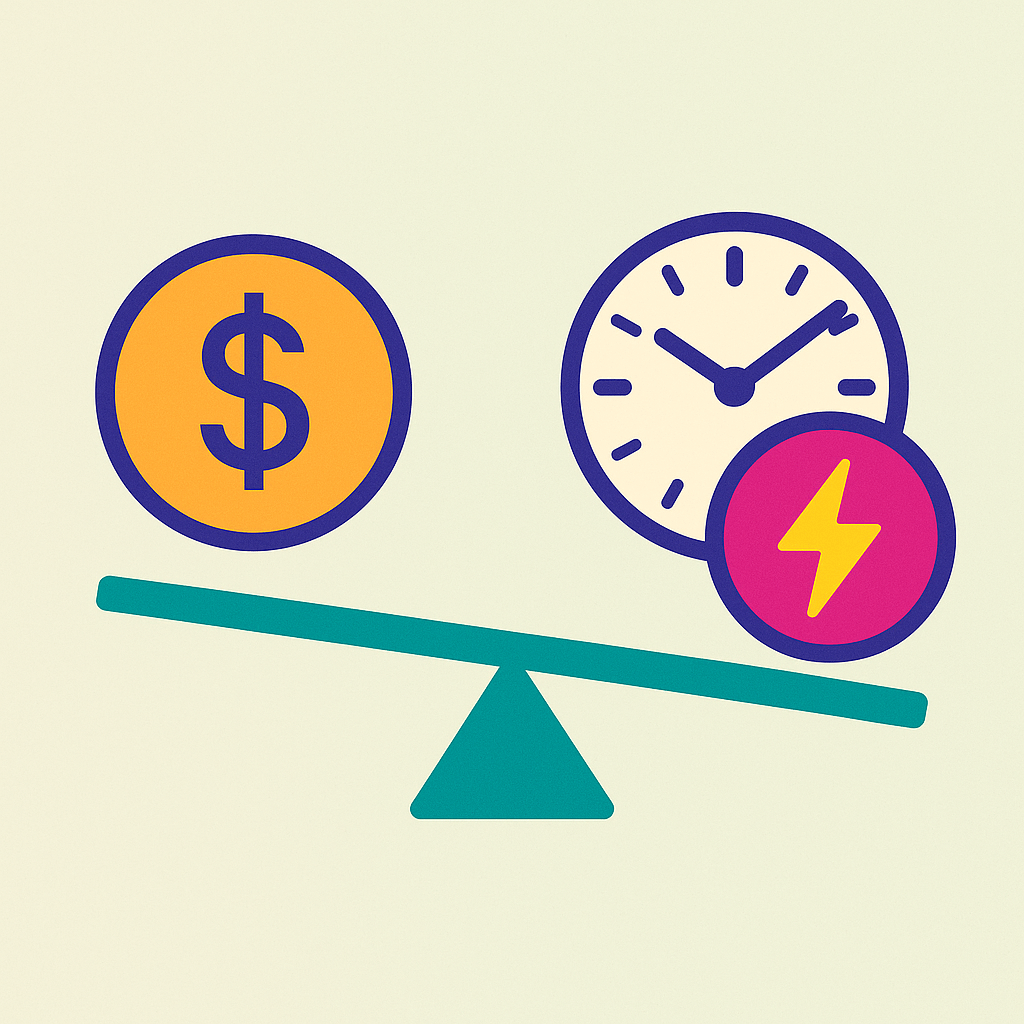
    The most powerful lesson in the book is to measure every expenditure as an exchange of time and energy.

    Instead of asking, “Can I afford this?”, ask, “How many hours of my life will this cost me?” Calculate your real hourly wage after taxes and expenses, and use that to measure every purchase. Suddenly, each expense becomes tangible. Those shoes don’t cost $150, they cost six hours of your freedom.

    This perspective transforms spending from a blur of digital transactions into something real. You start to see that every swipe of your card is a small trade of your life energy.

    Even the way we pay changes how we perceive spending. Paying with cash is psychologically the most painful. You literally hand over your money and feel it leave your pocket. Debit cards are easier; you only see the loss later when you check your bank statement. But credit cards are the most dangerous—they create an illusion of affordability. You don’t feel the loss until the bill arrives, usually when it’s too late.

    Thinking in terms of time and energy works better than any budgeting app and takes the payment method illusion out of the equation. It connects money back to its source: your life.

    The Cost of Boredom

    The book also touches on a subtler truth, one I’ve often seen in myself. Free time isn’t always free.

    When we’re bored, we start spending. “Maybe I’ll buy a better coffee machine.” “Maybe a new lens will make me take better photos.” Boredom leads to consumption because it makes you think that a purchase can fill the void.

    But what we really crave in those moments isn’t an object, it’s meaning, stimulation, engagement. Dopamine is the chemical disguise of emptiness.

    The solution isn’t to stop spending altogether. Spend on your interests, not your impulses. Use your resources to feed your creativity, not your cravings. If photography makes you feel alive, buy the gear you’ll actually use. But make sure it’s the act of creating that fulfills you, not the comfort of owning things.

    Don’t become the person who owns the best camera, lens, and gimbal, but never takes photos.

    How We’re Trained to Consume

    Spending money when bored is not your fault. Impulse buying isn’t a flaw of character; it’s a product of design. Modern marketing is engineered to make us feel incomplete.

    We’re sold the idea that consumption is self-improvement. “Invest in a new keyboard to boost productivity.” It’s all the same illusion, objects dressed as progress and investments.

    Even our leisure has been monetized. We’re told where to drink coffee, where to be seen, what to wear, and how to signal belonging. The fashion industry is the perfect example: clothes that are perfectly functional become “obsolete” overnight. And the cruelest part? Many buy the yoga pants without ever doing yoga.

    When people spend money for approval, marketers win, because the hunger for validation never ends. You can always have more stuff, you can always be richer.

    “Men do not desire to be rich, only to be richer than other men.”

    John Stuart Mill

    From Riches to Fulfillment

    Being “rich” is comparative, it’s always in relation to someone else. Fulfillment, on the other hand, is personal. It can’t be measured, copied, or competed over.

    Fulfillment takes you off the racetrack. It declutters your life and redirects your energy toward what truly matters: family, hobbies, learning, small luxuries that align with your values.

    To me, mindful spending isn’t about restriction, it’s about alignment. I use one simple test for larger purchases: frequency of use.

    If I buy a new coffee grinder, I don’t see it as a luxury. I use it every day, and I deeply enjoy making coffee. That’s worth it. But my camera, which I use only on trips, doesn’t need a new lens or body. It already serves its purpose. If I ever want to become a better photographer, I can invest in a course and buy better gear when I become a better photographer that spends a lot of time taking photos.

    Spend more where you live more. Spend less where you merely escape.

    The goal isn’t to own less—it’s to own consciously. Every dollar you spend is a choice about how to use your life energy. Make it count.


  • The Minimalist’s Portfolio: Investing for Simplicity and Peace

    The Minimalist’s Portfolio: Investing for Simplicity and Peace

    My investment habits have shifted over the years.

    Today, most of my money goes into ETFs (exchange-traded funds). I still keep a system I trust for picking individual stocks from time to time, but the bulk of my portfolio—around 75%—is in broad index funds and ETFs. The rest is a mix of early stock picks I’ve held onto and a handful of companies that my system has flagged as promising.

    The Hidden Cost of Complexity

    When I first started investing, people told me I could do better than the S&P 500. That my portfolio could “outperform.” Once I dug into the numbers, I realized how misleading that idea was. Roughly 80% of active fund managers—people whose full-time job is buying and selling stocks—fail to beat the S&P 500 over time.

    That means most of us, without insider knowledge or decades of experience, don’t stand a chance. Even legendary investors like Warren Buffett and Peter Lynch remind us that unless you have expertise, you’ll probably lose money trying to pick winners. And if you had that expertise, you wouldn’t be reading this—you’d be running a hedge fund.

    Another issue: industry leaders are always shifting. Just look at the history of the S&P 500—companies rise, companies fall. What seems like a “forever stock” today may be forgotten tomorrow. Even buy-and-hold isn’t bulletproof if you’re clinging to yesterday’s giants. The video below visualizes that clearly.

    Then there’s the literal cost of complexity: commissions, spreads, and taxes on every trade. The more you churn your portfolio, the harder it is for your returns to keep up.

    Wealth doesn’t come from clever tricks. It comes from patience. Time is your ally; safety is what lets you sleep at night. Sure, you can gamble occasionally, but even then, do your homework.

    And don’t fall for the social media gurus promising “5 steps to beat the market.” If their magic worked, they wouldn’t be busy posting TikToks—they’d be quietly compounding wealth.

    As Steve Jobs said: “Simplicity is key.”

    A Recipe That Works

    One of the most popular frameworks is the 3-fund portfolio:

    • A total U.S. stock market index fund
    • A total international stock market index fund
    • A bond index fund

    It’s boring, but it works. It’s diversified, resilient, and almost effortless to manage.

    Personally, I spice it up. I hold:

    • QQQ (tech exposure)
    • SPY (the S&P 500 itself)
    • SCHD (for dividends and income)
    • VT (global exposure)
    • MCHI (a small bet on China)

    This way, I combine growth, resilience, and income streams. Of course this is not an investment advice. You can even buy ETFs of certain sectors you think will flourish in the coming years (alternative energy, electric cars, AI, etc.)

    The “Set It and Forget It” Mindset

    The hardest part of investing isn’t choosing the funds—it’s managing your own behavior.

    Do your budget, allocate money to investments, and keep adding regularly. Don’t try to time the market. Don’t panic when things fall. And never invest money you’ll need in the short term.

    When markets drop, see it as a discount—your money buys more shares than before. Think decades, not days. Investing isn’t about getting rich fast; it’s about quietly, steadily building wealth.

    Peace comes when you realize you don’t need to chase every opportunity. You need a simple system, the discipline to stick with it, and the patience to let time work its magic.

  • The Window of Abundance

    The Window of Abundance

    Have you ever wondered why two people looking at the same event can feel completely different things? Or why some people constantly live in “lack”, while others experience “abundance”, no matter the circumstances? The answer may lie in the window through which we view the world. 

    Let me continue with a quote from Haemin Sunim’s book The Things You Can See Only When You Slow Down:

    “There is a famous Buddhist saying that everyone appears as buddhas in the eyes of the Buddha and everyone appears as pigs in the eyes of a pig. It suggests that the world is experienced according to the state of one’s mind.

    When your mind is joyful and compassionate, the world is, too. When your mind is filled with negative thoughts, the world appears negative, too.”

    In essence, everyone shapes their life through their own perspective. Negative thoughts lead us to interpret events negatively and cause us to focus on the empty side of the glass in every situation we encounter.

    This is not just a spiritual or philosophical matter — it also affects our financial mindset. If you look at life through a window of scarcity, you will only see lack and inadequacy. Earning a small amount of money and constantly focusing on it, comparing ourselves to what others have, will drag us into a spiral of unhappiness and into a state of mind that becomes increasingly difficult to escape. If we constantly think in terms of lack and insufficiency, what we have will never feel enough. Having a low income might be a reality; but the meaning we assign to it, determines the impact it has on us.

    If we seek happiness not in money but in the events we experience, we may save ourselves from falling into this spiral. And when that happens, we will realize that we are actually richer than we thought.

    A Scenario: Town and City

    Let’s consider two different life scenarios in the United States.

    One person lives in a small town in North Carolina. They earn $55,000 a year. Their rent is $900 per month, and they spend around $700 on basic monthly needs like groceries, transportation, and utilities. That leaves them with about $16,800 in annual savings. They work 9 to 5, and spend their free time hiking nearby trails or enjoying a quiet local lake.

    Another person lives in New York City. They earn $180,000 a year. Their rent is $3,800 per month, and their other expenses come to $2,000 per month — a conservative estimate given the cost of living. That leaves about $28,800 in savings annually. However, they work long hours, often from 9 AM to 8 PM, and after commuting and managing personal responsibilities, they have very limited personal time. On top of that, they are constantly surrounded by high earners and luxury lifestyles, making even a $2,000 monthly spend feel inadequate.

    On paper, the person in the city seems to earn more. But the real question is this:
    Which of them is truly living in “abundance”?

    The Answer Is Not Money

    Of course, these assumptions are very simple. Life is a much more complex setup. But I want to make a point here: earning more does not always mean better quality of life. More time, less stress, more nature and satisfaction can sometimes be hidden in “less.”

    The answer to the question often lies not in money, but in perspective. A person who sees life through the lens of abundance knows how to be content with what they have. The other, no matter how much they earn, cannot escape the feeling of lack.

    Final Words

    Everyone believes they will be happier once they attain what they don’t have — and this is a very natural human behavior. But the real virtue lies in being able to see the value of what we already possess. Listening to ourselves, knowing what we want, analyzing it, and observing — even from a bit of distance — can be simple steps that make it easier to appreciate what we have.

    Life is a matter of perception.
    Abundance begins not in a bank account, but in our minds.
    And to see it, all we need to do is change the window we look through.

    If you view life through the eyes of abundance, you will live in abundance.

  • Compound Returns

    Compound Returns

    “All returns in life, whether in wealth, relationships, or knowledge, come from compound interest. Play long-term games!”

    Naval Ravikant

    Compound Interest Returns

    Investments made in small sizes grow over time through the snowball effect, bringing us significant gains. Nick Maggiulli’s book Just Keep Buying is an excellent guide to understanding the snowball effect of investing. A chart in the book clearly shows how your savings and investments compound over time. In the chart below, the dark gray area represents your savings, while the light gray area represents the share of investments in your wealth. As the years progress, even if savings remain constant, the share of investments grows, and by the end of 40 years, it constitutes the majority of your wealth. (Yes, 40 years. Long-term is good. Start investing now! There’s no get-rich-quick scheme.)

    Returning to Naval’s initial statement, we’ve illustrated how wealth grows through compound interest. But what about the other parts of your life? You may have saved a lot of money, and your investments might grow so much that you no longer need to work, leaving you with ample free time. But do you have the health needed to enjoy spending that money? Or the social circle to share it with? That’s exactly the question Naval is raising. He says, “All returns in life” grow through compound returns. In essence, everything accumulates in our lives.

    Investing in the Future

    “Play long-term games” is the less obvious part of this equation. It’s easy to understand, but people don’t want to believe it. We looked at 40 years in the chart above. This is a timeframe you’ll see almost everywhere. When it comes to investing, unless it’s a scam, timeframes typically start at 15 years. It seems those who consistently “play long-term games” in life are the ones who win. Instead of focusing on short-term quick-wins, if you think long-term and evaluate everything through this lens, you’ll become a very different person. Short-term gains—whether in money or other areas—are rarely built on solid foundations. They often rely on chance and are far more likely to be fleeting.

    Non-financial areas are equally critical. Don’t neglect your friends and family for short-term gains. You might want to dedicate all your time to work today to earn more money. However, in the long term, this might lead to loneliness. Similarly, don’t forget to discover yourself and spend time on your interests due to work intensity. The true meaning of life lies in these areas. Spending time with your child, chatting with friends, making your family happy—these should be your top priorities in life. Prioritizing money over these could leave you alone when it comes time to spend it. Life grows through sharing. Those people aren’t there for your money. If anyone around you pressures you to make more money, distance yourself from them. Very few people live a materially driven life and experience true happiness.

    Money and Happiness

    Nick Maggiulli says in his book: “Ultimately, your money is a tool to help you live the life you want.” This is crucial to remember. Money is merely a tool to make life easier; it should never be the goal. It can help create experiences that add meaning and value to your life, but it cannot be the sole source of happiness. The material things you buy with it often provide only temporary satisfaction. True happiness lies in shared memories, unique experiences, and a life shared with loved ones.

    Of course, finding what truly makes you happy is a challenging process. Often, we believe material things will bring us happiness. But in the long run, these things lose their meaning and may leave us feeling empty. That’s why focusing on “experiences” in the search for meaning in life, is a far more enduring and valuable strategy. The real wealth of life lies in these experiences and the connections that cannot be bought with money.

    I want to share something I noticed years ago at a wedding I attended. It was in a luxurious hotel in Italy, and the guests were quite a high-profile group. Expensive suits, luxurious watches, and a sparkling decor—the atmosphere was like a movie scene. However, when I spoke to the people, I realized that behind this outwardly “wealthy” image, there was deep unhappiness. People with family businesses talked about their conflicts with their fathers, and almost everyone, regardless of gender, mentioned their use of antidepressants. There was plenty of money, but very little happiness. There was wealth, but no joy, no contentment. Instead, there was scarcity, the constant pursuit of more, an inability to appreciate what they had, a senseless race, and depression. This experience confirmed something for me: money does not fill life with meaning; it is merely a tool. True happiness lies beyond what we own—in shared moments and meaningful relationships.

    A Long-Term Mindset

    Invest in your social relationships. These are your most valuable assets in life. Long-standing friendships, where you can share joy in good times and troubles in bad times, are priceless and irreplaceable. This is a more important asset than all your wealth. Just like your wealth, your friendships will compound and grow over time when you share experiences, making the “long-term” perspective crucial here as well.

    Exercise daily for your health. Keeping your body active with even a little exercise can help you maintain your fitness and increase your chances of leading a healthy life in the future. Remember, after a certain age, reaping the benefits of exercise becomes much harder. However, people who have exercised regularly for years continue to see the gains even as they age. It’s a proven fact that incorporating both resistance and cardio exercises is essential for good health.

    Investing in your health long-term will yield significant returns in the future. The effects of daily exercise may not be noticeable right away, but you’ll understand them years later.

    Knowledge works the same way. “It’s never too late to learn” is a very true saying. Warren Buffett often emphasizes the value he places on reading. He says he spends 80% of his day reading.

    Let me admit something: after high school, where I read mandatory books, I hardly read at all—until four years ago. Considering I’m now 40, that’s a very long time. Two factors helped me start reading again. The first was discovering e-books. Reading on an iPad or Kindle was revolutionary for me. The second was gravitating toward books that aligned with my interests. Books on investing, human development, history, meditation, and mindfulness… Once I started reading these, I couldn’t get enough. I became someone who reads 20 minutes every morning and 1-2 hours on weekends. As I accumulated knowledge, I began enjoying books even more. I started taking notes, comparing arguments, and delving deeper into topics as I consumed related content. While much of this knowledge isn’t something I use daily, I feel enriched within. I’ve realized I can apply what I know in various fields and interpret situations more clearly.

    By reading about others’ experiences, we can add to our own. The investment in knowledge we make today may not yield immediate returns, but it will benefit us in the future. As Benjamin Franklin said: “An investment in knowledge pays the best interest.”

    Play Long-Term Games!

    The one unchanging truth is that in every area of life, where you build incrementally every day, month, and year, compound returns can bring extraordinary results. Listen to Naval and play long-term games. Surrender yourself to the power of compound returns. It will take care of the rest. Incorporate the power of compounding into your life with a small step today!

    Albert Einstein put it beautifully: “Compound interest is the eighth wonder of the world. He who understands it, earns it; he who doesn’t, pays it”

  • What Is Abundance?

    What Is Abundance?

    The concept of abundance is one that many of us struggle to define. What does true abundance mean? In this post, I’ll try to shed light on this idea.

    Defining Abundance

    Is abundance about having everything we desire? Is it being able to buy anything that catches our eye? Or is it simply having lots of money?

     I believe abundance is none of these. To me, abundance means not yearning for more in any area of our lives.

    Take work, for example. I feel a sense of abundance in this area. I have a good position, a private office, and a comfortable car. Sure, there could always be better perks if we dig into the details. But I don’t feel a strong desire for anything else in this regard. I feel abundant. Or consider my home. I live in an average-sized house in a pleasant neighborhood. A terrace would be great, and I wouldn’t say no to more rooms or a larger living space. But I don’t actively wish for these things. I feel abundant in this aspect as well. Socially, I feel I have enough close friends. My sense of abundance is strong in this area too.

    The Trap of Comparison

    There’s no end to wanting more money or constantly buying things. Unless you’re Elon Musk or Warren Buffett, there will always be people wealthier than you and with more possessions. If you need guidance on this, I highly recommend Morgan Housel’s book The Psychology of Money. The author provides excellent examples about the concept of comparison:

    “The ceiling of social comparison is so high that virtually no one will ever hit it. Which means it’s a battle that can never be won, or that the only way to win is to not fight to begin with—to accept that you might have enough, even if it’s less than those around you.”

    This means that as long as what we have feels sufficient, we are living in abundance. But when we compare, we enter an endless spiral where “enough” is never enough.

    To escape this, we must stop comparing ourselves to others. As long as we envy others’ possessions, we’ll never understand what abundance truly means. There will always be someone wearing a better watch, driving a more expensive car, or living in a fancier house. Knowing your personal “enough” and not desiring more can lead you to a life filled with abundance.

    Here’s an interesting side note: we tend to compare ourselves to those ahead of us, never those who are less fortunate. This isn’t to suggest we should. I believe all comparisons are flawed; I just find this tendency intriguing.

    The Cycle of Outdated and New

    There’s also the issue of things losing their luster. We love our new possessions initially, but soon, they stop giving us the same joy. What happens next? We feel an irresistible urge to buy newer ones—phones with features we’ll never use, cars bigger than we need, trendy clothes that quickly go out of style.

    Living in a consumer-driven society, appreciating what we already have and resisting the lure of the new requires serious effort. I’ve developed a few personal tactics for this. For instance, I choose classic, simple clothing over trendy items, so I can wear them for years. If I were to buy a car, I’d go for the highest spec of a mid-range brand, ensuring long-term comfort. These choices extend the lifespan of my purchases and help me resist unnecessary upgrades.

    The Personal Meaning of Abundance

    Even though this post is titled “What Is Abundance?” I don’t think I can provide a definitive answer. Instead, I’ll share what it means to me and reflect on what gives me a sense of abundance.

    Many people think money guarantees a good life, but most have no clear idea of what that “good life” entails. This lack of clarity leads to aimlessly chasing more money and spending it on “better” things without ever feeling fulfilled.

    For me, abundance is about having enough of what brings meaning to our lives. But first, we need to identify what that is. It varies widely: helping animals, growing rare plants, cooking, or listening to music on a premium sound system. These choices are deeply personal, and there’s no right or wrong.

    For me, spending time with family and friends is a priority. That requires having plenty of free time. Do I have it? Not really. As a full-time office worker, I’m constrained by laws and company policies regarding time off. In my current situation, I can’t claim to have an abundance of time.

    Materially, I think I have a healthy relationship with things. I don’t live a luxurious life, though this definition is subjective. For example, I enjoy summer trips to the southern coast. I don’t splurge on extravagant beach clubs; instead, I find joy in simple pleasures—a modest meal, a day at the public beach, and some wine or beer. This simplicity makes me feel rich in this area of life.

    Financial Worries

    While I feel abundant, I’m not without worries. The idea of raising a child and the associated costs terrify me. Would I be able to provide the same life my parents gave me? These fears are deeply tied to money. John Armstrong’s book How to Worry Less About Money suggests addressing financial concerns by answering four questions:

    • Why do I need money and why is it important to me?
    • How much money do I need for this purpose?
    • What’s the best way for me to acquire this amount?
    • What economic responsibilities do I have toward others?

    These questions play a significant role in helping us feel that we are living in abundance. The feeling of needing money and the sense of living in abundance are essentially two sides of the same coin.

    The question of why we need money is a profound one. If your answer revolves around owning things, you’ll end up in an endless spiral because there will always be more expensive options. In the same book (How to Worry Less About Money), the author explains that financial issues often stem from our social anxieties. For example, looking at my perfectly functional car and wanting to replace it is a worry rooted in my social relationships. I would argue that these types of concerns never truly end. Similarly, the fear of struggling with my child’s school expenses is also a form of social pressure. If there’s a reason not to send them to the local public school, it’s likely because others are sending their children to private schools.

    If you can answer, “I am satisfied with my current life and only need enough money to maintain my current standard of living,” then you are closer to answering the second question. The phrase “current standard” can be shaped to your preferences. This might include dining at a nice restaurant twice a week, enjoying good wine, smoking a cigar once a week, and taking a vacation every summer. If you are content with your current level, you have already achieved abundance. To determine how much money you need, you can calculate your annual expenses and adjust them for inflation. The second question involves more budgeting and calculations. That’s something to delve into at another time. But let’s assume you’ve arrived at a figure.

    The third question, for me, is a balancing act. If I can cut expenses and gain more personal time, I’ll always choose that route, even if it means giving up some luxuries. For example, would I prefer working 10 hours a day for 5 units of income, or 5 hours a day for 3 units? My answer will always be to keep the hours low.

    The fourth question, for me, revolves around family and, more specifically, child-related responsibilities. For others, it might also include obligations to care for their parents. These responsibilities must be factored into the equation.

    Understanding the answers to these questions can also clarify whether we’re living in abundance. After all, both the need for money and the feeling of abundance are two sides of the same coin.

    Achieving a Sense of Abundance

    There’s no one-size-fits-all formula, but here are some steps to explore:

    1. Observe your activities and identify what brings you joy.
    2. Create a list and start scheduling time for these things.
    3. Assess whether enjoying these requires additional spending.
    4. Develop a plan to prioritize what makes you happy while sacrificing less meaningful activities.
    5. Estimate the resources (time, money, energy) you’ll need to focus on these pursuits.

    Abundance is not just about what we have but about how what we have adds meaning to our lives. Instead of acquiring more, let’s focus on choosing what’s truly valuable.

    As Naval Ravikant says in The Almanack of Naval Ravikant:

    “If you spend your time doing what you love, you’re already rich.” In all circumstances, prioritize having the freedom to control your time.

    References:

    Housel, M. (2020). The Psychology of Money: Timeless Lessons on Wealth, Greed, and Happiness. Harriman House.

    Armstrong, J. (2012). How to Worry Less About Money. The School of Life.

    Jorgenson, E. (2020). The Almanack of Naval Ravikant: A Guide to Wealth and Happiness. Self-published.